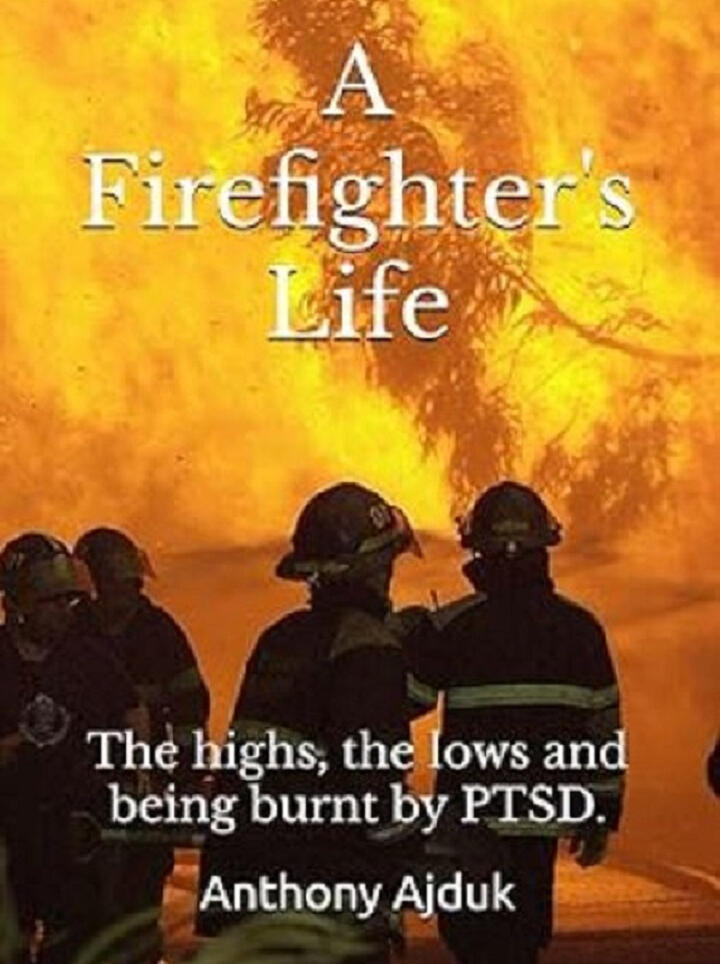
A FIREFIGHTER'S LIFE
The highs, the lows and being burnt by PTSD
Scroll to bottom to read 1st Chapter
The book follows my 31 year career as a professional firefighter in Western Australia who was medically retired due to Post Traumatic Stress Disorder. One defining traffic accident in 2012 tipped me over the edge and I never returned to work. That traffic accident is where the book starts.
What followed was 18 months of treatment under a Clinical Psychologist that took me through the process of understanding what had happened in terms of my mental health. The story outlines my symptoms and how they affected my life and that of my family. It is all the things that sufferers do not talk about and it is detailed unambiguously and graphically.
The story switches between that process and my life from my late teens through my career and finally to medical retirement.
Living with PTSD is like fighting with your mind every day. One part of your mind trying to destroy you while the other part tries to fight the horror being inflicted.
The language and incident descriptions are raw and shocking but it had to be to capture the emotion and tragedy of what Firefighters see and do on a daily basis. It is warts and all, the good, the bad and the ugly.
On a lighter side the story is interspersed with funny stories of life on a Fire Station where grown men have a habit of practical joking and shenanigans. The story questions whether this behaviour is the pressure valve that releases the stress and anxiety of a PTSD build up which is likened to a cup being filled water before finally overflowing.
The underlying motive of the story is to inform people of the growing burden of PTSD on emergency service workers, specifically Firefighters. It is a growing problem with solutions hard to find but consequences brutal and in some cases fatal.
The story concludes with my medical retirement and subsequent recovery which has me living with but managing PTSD.
It is a story that needs to be told so that people suffering this hideous condition can be understood and accepted as being injured without there being any obvious visible wounds.
Anthony Ajduk - Author
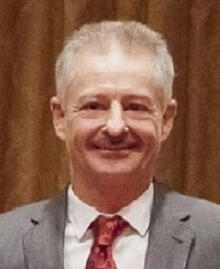
The author is a 66 year old retired Firefighter from Perth, Western Australia. After serving 31 years as a career firefighter and being medically retired due to Post Traumatic Stress Disorder he believed more people needed to be informed about Post Traumatic Stress Disorder and its effect on Firefighters.
He writes in a raw form to express the reality and horror that firefighters face on a daily basis and how PTSD torments and punishes you in a mental and physical battle that is akin to a fight with yourself.
On the lighter side he is able to bring humour into his writing by describing the funny things that can happen on a fire station when a group of men and women get to live in close quarters.
Reader Reviews
John Skyle
27 reviews3 followers
Follow
December 5, 2025
A Firefighter’s Life is a compelling and deeply human memoir that follows Anthony Ajduk from his early days in recruitment to the end of his career. His reflections on life in Australian fire stations from the 80s to 2013 bring back unforgettable memories, while his honest account of the highs, lows, and unseen emotional toll of the job is both eye-opening and moving. Ajduk writes with raw clarity about the impact of PTSD, yet balances the heaviness with humour and warmth from firehouse life. Powerful, heartfelt, and ultimately hopeful, this book offers a profound understanding of the hidden cost of service.Rodney Innes
1 review
Follow
November 12, 2024
A great read of a career firefighter from recruitment to retirement, brought back many memories of life around the fire station in Australia from the 80's to 2013.
It has many highs and many lows and the unseen trauma to our mental health well being that can, slowly over the years take its toll on any emergency worker in the course of their job, and to be regularly confronted with horrific scenes that the general public will on average never see.Marinal Elwood
72 reviews8 followers
Follow
September 11, 2025
A Firefighter’s Life by Anthony Ajduk is a powerful and unflinching memoir that captures both the courage and the hidden struggles of those who serve. Anthony’s story is raw, emotional, and deeply human it shines a light on the unseen toll PTSD takes, while also reminding us of the resilience of the human spirit. Painful, honest, yet ultimately hopeful, this is a book that stays with you long after you finish.Susan Morgan
10 reviews
Follow
August 30, 2025
An emotional and gripping story. The author doesn’t hold back in describing the toll PTSD takes, not just on himself but on his family. The mix of shocking honesty and lighter moments from the fire station made it impossible to put down. A must-read for anyone who wants to truly understand the hidden cost of being a first responder
5.0 out of 5 stars Buy this book
Reviewed in Australia on 28 November 2025
Format: Kindle Verified Purchase
Great read. Highly recommendedPhill Cribb
5.0 out of 5 stars Great record of Fire Brigade history and how Critical Incidents can build to bring on PTSD
Reviewed in Australia on 16 October 2024
Format: Paperback Verified Purchase
Great insight as to living on a Fire Station in the early 1980's. Tony has captured the day to day activities of Perth Fire Station from drills, turnouts, living conditions and the pranks of firefighters. He has also recorded what firefighters are exposed to on a regular basis and what these jobs can do to a person with the ever increasing weight of horrific scenes. Tony bravely opens up on how one day his dam had just filled up and his PTSD journey started. A WARNING TO ALL. It is a "heads up" to firefighters on where it can start and how it can creep up on you. Good Read, congratulation Tony.Amazon Customer
5.0 out of 5 stars Fantastic insight into PTSD from a frontline firefighter
Reviewed in Australia on 9 September 2024
Format: Kindle Verified Purchase
I was fortunate enough to meet Anthony on a recent hike of the Kokoda Track, so knew a little of his story. This book has some harrowing stories of what happened throughout Anthonys career, mixed with ridiculous humour and pranks, making for a great read. I can’t help but be reminded of the similarities to my Navy career. Thanks again for shining a light on PTSD, and having the courage to share your personal journey mate. I would recommend this book to anyone who wants to understand more about PTSD, and the impact it has on our incredible emergency services workers.Steph
5.0 out of 5 stars A great story of resilience
Reviewed in Australia on 28 September 2024
Format: Paperback Verified Purchase
An easy, yet emotional read of triumph over many difficultiesAmazon Customer
5.0 out of 5 stars Book review
Reviewed in Canada on 28 September 2025
Format: PaperbackVerified Purchase
Excellent book. As a firefighter with 39 years service this book brought back many memories. Also like the focus on PTSD which is an ongoing concern for firefighters.
Contact Us
Buy
There are a number of ways to purchase "A Firefighter's Life". If you wish to purchase by direct bank transfer or PayID then go to the contact form and send me a mesage with your delivery address and I will send my bank and PayID details. The cost for purchase including Australia wide postage is $29.95.
You can purchase through Amazon in eBook and paperback. There is an Amazon link to the right under the Credit Card button.
Gallery & Audio
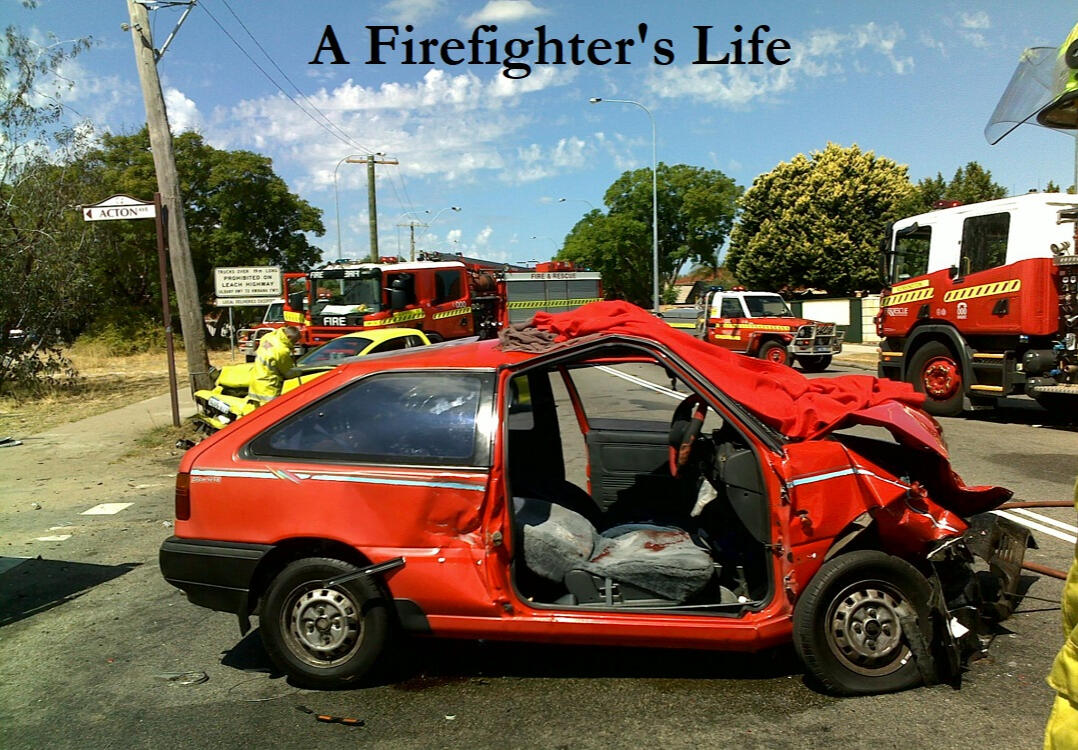
Chapter 1
“Attention, Attention, crew of Welshpool 1st, Belmont backing up, call from police to a traffic accident persons trapped, Orrong Road with a cross of Leach Highway”.
The lights in my dorm have burst into life and I am woken from my light slumber, the call repeats, “Attention, Attention, crew of Welshpool 1st, Belmont backing up, call from police to a traffic accident persons trapped on Orrong Road with a cross of Leach Highway”.
“Shit, it’s 1.30am, so much for a quiet night”, I think to myself. I jump out of bed and start dressing whilst listening to the call to establish the precise location of the call. My heart rate has responded to the sudden lights on and speakers now loudly sounding out the chimes that follow the announcement. It has rapidly increased and I can feel it pounding my chest. I am dressed, where are my glasses, I grab them from the bedside table and head towards the engine room. I see the firies coming from their end of the station and we file out of the duty room and into the engine room.
I get to my gear bag, grab my over trousers and put them on remembering to make sure to put my boots on next and zip them up. My back has been a problem for a few years and trying to bend over and zip up once I have my tunic on is just too bloody difficult. I’m 54 years old and apart from a dodgy back, I am physically fit, but being suddenly woken in the middle of the night to attend accidents, fires and all manner of other incidents is not fun anymore, it’s a pain in the arse.
I get up into my seat as the driver is getting in and although I know he will know where he is going, I ask, “Leach and Orrong, you got it”.
“No problem” he replies.
“Thought so, just checking” I respond.
“6AR, Welshpool 1st turning out to reported traffic accident, persons trapped, Orrong and Leach, SO Ajduk in charge. We drive out of the station and I hit the lights, holding off on the sirens as we have a green light at McDowell Street lights and no traffic in sight. The driver wheels the twelve ton appliance around the corner and we head towards Orrong Road, a few hundred metres and then a left turn. I hit the sirens as we approach the lights, turn left and start the 3km straight run to Leach Highway flyover.
My mind goes to places I do not like. This has become standard over the last few years. Where are my kids. It is a ridiculous thought, it is 1.30am on a Friday morning and they will be home in bed, they have kids and jobs, they are not out at this time of the morning. I satisfy myself that I will not be confronted with the sight of their cars on arrival at the scene, but it will niggle at me until I arrive and confirm.
My thoughts switch to the possible scene, Orrong Road with lights and on/off ramps to Leach Highway over pass, most likely someone running a red light on Orrong and T boning a car entering Orrong. Not too much thought is consumed on the scenario, I have learnt over thirty years in this job not to assume anything, the reality and all its potential horror and misery will soon be all too apparent. Assumptions create tunnel vision and unnecessary stress if they are wrong, my mind needs to be a clear slate to allow for logical and deliberate decisions.
We approach Kewdale Road, the driver eases off the accelerator, “Clear left” I inform him.
“Thanks” he replies and with no other traffic in sight he accelerates through the intersection. Looking ahead past the next set of lights at Pilbara Street, there is an absolute kaleidoscope of blue and red lights. “Looks like a definite goer” says the driver.
“You’re on the money” I respond.
“Clear left” I inform again and then switch my sights back to the looming scene unfolding in the closing distance.
We start to slow, sirens off, start looking for the appropriate place to site the appliance. I start to scan the scene, looks like a taxi and a Toyota FJ50. It’s not the kids or anyone I know. That confirmation relaxes my mind to a certain extent and I start to focus more intently on the scene. Coppers everywhere, cars everywhere, flashing lights everywhere. A police officer motions us toward him and I instruct the driver to move in that direction.
“6AR, Welshpool 1st arrived Orrong and Leach, 66, confirmed traffic accident”. This is a standard arrival code that will be followed up with a more detailed informative message within the next five to ten minutes.
I dismount from the appliance, put my helmet on and reach into my tunic pocket for gloves that will go over my body fluid protective gloves. I walk towards two officers who are standing over someone who is lying on the ground throwing his arms around whilst incoherently speaking.
“How ya’ going mate, what have we got”, I ask the male officer.
“This fucking prick has just killed two people” he says with an expected tone of disgust.
“It wasn’t fucking me, I wasn’t driving, didn’t you see the driver running away, I wasn’t fucking driving”.
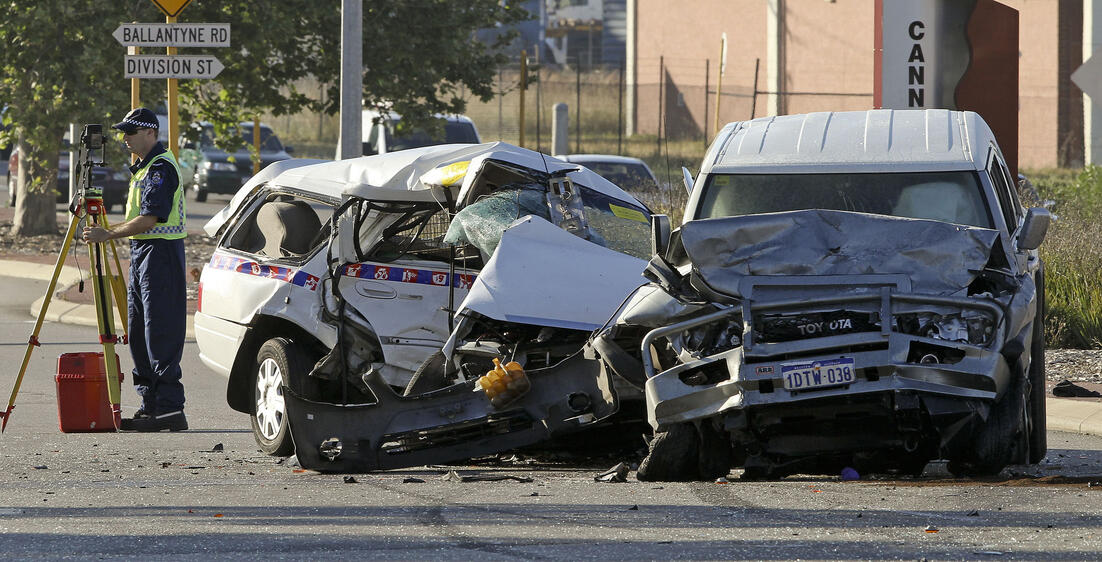
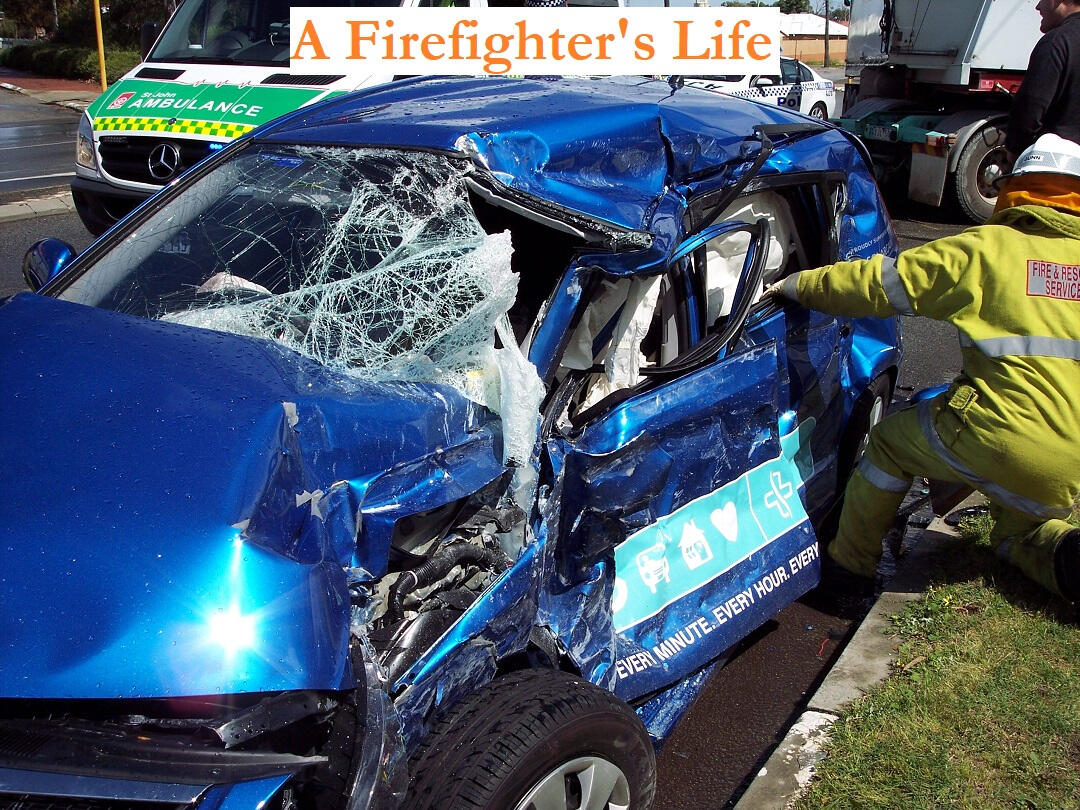
The police officer ignores his plea and points me to the taxi, I walk over to it approaching the caved in driver’s side. Clearly, the larger, heavier four wheel drive has violently T boned the taxi in the perfect location to create maximum fatal trauma. I look inside, the two occupants are undoubtedly deceased. The driver is pushed across into the passenger’s side, his head resting on the other occupant’s upper arm, eyes open, and a stare that goes nowhere. His feet appear trapped amongst the twisted, gouging metal that was once door, accelerator, brake pedal and lower sill. The passenger’s head is cocked over to the right resting on the driver’s head, eyes open, his empty soulless stare also going nowhere. His right arm is almost around the shoulders of the driver, an almost comforting pose, they have died together violently at the hands of a drunken, drug affected moron who simply lacked regard for life. In a cruel twist the passenger’s left hand is on his lap, his index finger pointing, thumb pointed up at right angles to it and other fingers coiled inwards. Was he pointing to and possibly warning the driver of the vehicle running the red light that was about to snuff out their lives? He is frozen in time. Only they know the answer. Visually, their injuries are not apparent, I have seen worse but the scene is morbid and sad with the catastrophic vehicle damage adding to the misery and horror that all on scene will call their workplace for the next three to four hours.
I look around at the scene, taking in all manner of details. The dashboard, steering wheel and radios have all been destroyed, as if blown apart by a bomb. It is just a mass of twisted metal, broken seats and destroyed lives. I am disgusted. My crew are going about their duties, they know what to do and are busy unreeling the hose reel, checking batteries are disconnected and placing a salvage sheet over the front to shield the deceased. We cannot do anymore at this point apart from securing the scene and making it safe, our real work will come later.
I walk back toward the two police officers guarding the offending driver. He continues to claim he is innocent. “It wasn’t fucking me, didn’t you see the driver running away. I have kids, what is going to fucking happen to them if I get blamed” he sobs. “My fucking legs are broken” he pleads but no one cares.
I think this is the point my life changes. I feel an extremely strong urge to take three more steps and then just stomp up and down on his legs. I want to inflict as much pain on this low life piece of shit as I can. I want to jump up and down on his legs, hear his bones crack even more until they splinter and break the skin. I want to reduce this arsehole to a cripple who will never walk again, I want to hear him scream in such agony that the memory of his pain will be with him until the day he dies. I actually believe at this point in time, I am capable of killing another human being. Accepting him as a human being is being over generous.
I need to move away now and quickly. My thoughts are broken by the voice of one of my crew.
“Tony, do you want us to give him some first aid” he asks.
“Fuck him, let him suffer” I reply. I think and then again respond.
“If you feel you need to help, go ahead, but I am not directing you to do anything to help him”.
Shit, I think, I have never reacted in this manner at an incident. I may have been angry, but I have never felt such strong feelings. What is happening to me?
Again, my thoughts are interrupted by the voice of one of my crew.
“Tony, we are hosing down under the bonnet of the Toyota and all the fuel, oil and coolant is running down to where the bloke is lying and soaking him in the grimy mess, do you want us to move him” he explains.
“Fuck him, let him lie in the shit” I bark back.
Holy shit, I think to myself. Walk away, just remove yourself from the immediate scene, this is just abnormal.
I make my way back to the appliance to make my first informative message, at this point I am experiencing difficulty at focusing on the content of this standard message. I am still focused on my reaction to the culprit who has bought approximately thirty emergency service workers and witnesses together to deal with the tragic and untimely death of two innocent human beings.
“6AR, Welshpool 1st, confirm 2nd alarm traffic accident, two code 90 (fatalities) that are trapped and will require extrication. We cannot commence any extrication until Major Crash has completed their work and anticipate we will be on scene for some hours. More information to follow as it comes to hand.” I am amazed that I got the message completed without blurting some obscenity to do with the culprit.
“Roger Welshpool 1st “comes the reply from 6AR.
I make my way back towards the scene and notice that paramedics are now attending to the injured culprit. Fortunately, he is quickly removed from the scene and I feel a sense of relief. I now know that I cannot inflict the pain on him that he deserves, an action that would create huge problems for myself on a professional level.
I now must focus on the job at hand. A sad, miserable and difficult task that most average people would not be able to deal with both mentally and physically. I have seen bystanders throw up, collapse and breakdown emotionally at similar scenes, yet as emergency services workers we are expected to and do remain calm, focused and professional in dealing with human misery on a regular basis. On the outside anyway!!
I move toward my crew and our back up crew who are looking over the wreck and starting the initial discussions about the approach we will take to remove the deceased whilst providing dignity and respect for the lifeless bodies. We are not able to start any process until the Major Crash Squad have carried out their investigation, this involves measurements, photos and identification procedures.
As the officer in charge, I am approached by the senior police officer. I ask him if there is anything he wishes us to do at this point in time and he responds in the negative. I advise that after the preliminary size up of our task we will move away from the immediate vicinity and allow Major Crash, who have not yet arrived, to carry out their tasks. The police are satisfied with this approach. The officer informs me that they believe the passenger is an international traveller who had arrived in Australia thirty minutes earlier and was in the taxi on his way to his hotel. The tragedy of this accident continues to worsen.
Our two (Welshpool and Belmont) crews discuss the process we think we will adopt when it is time to extricate the bodies. It is not anticipated that this task will be unusually difficult in technical terms, firefighters are generally very good at making these decisions in a practical and logical manner.
The DFES chaplain has arrived on scene, standard practise for a multiple fatality, and I discuss with him the fact that we will move off the immediate scene (100 metres down the road) until Major Crash require extrication. The chaplain is there for moral, psychological and emotional support. They will set up their vehicle, boil the kettle and provide refreshments as well, this is always welcomed by firefighters, no matter the time of day.
Within ten minutes we are sitting down with hot coffee and food, a welcome respite from the horror just up the road. I explain to Ron (the chaplain) that we already had a fatality this week, a man perished in a house fire on our first day shift and the law of averages said we should not have got another in this short space of time. The law of averages had failed miserably and had no regard for our continued exposure to death and tragedy.
I sit and sip my coffee. I am feeling more relaxed since my apparent brain snap earlier. I am convinced it was just an emotional reaction given the culprit’s denial of any wrong doing that resulted in the death of two innocent people. I have found as I have got older, my emotions are increasingly raw, thirty years of this work, being a parent and grandparent and seeing how precious and fragile life is has made me more vulnerable, maybe just more human.
The chaplain is talking to us all saying that if we need help, not to be afraid to ask, that many more firefighters are coming forward requesting assistance. At that point one of my senior firefighters makes a statement that astounds me and will be referred to in greater detail later in this book.
“If firies can’t handle these types of scenes then they shouldn’t be in the job” he explains with a bravado that I interpret as complete stupidity and lack of understanding. This is the very attitude that DFES, UFU (United Firefighters Union) and many emergency service organizations have been trying to change over many years. It is apparent that the message is simply not getting through to some individuals and as his officer I inform him that those comments are well and truly out of order. As I have already witnessed and as I will learn later, reactions are uncontrolled and their onset unpredictable.
Time in these situations behaves abnormally and in what seems a short time but is actually over an hour we are requested by police to return to the immediate scene to assist.
I approach a police officer and he requests that we carry out some initial work to expose the interior of the vehicle to allow them access for further examination and photo evidence. This is unusual but we comply.
“Can you open up the passenger side of the vehicle first” he asks.
“No problem” is my response.
The crew commence the opening and then removal of the front passenger door and B pillar (the pillar between front and rear door). This opens up the side of the car allowing increased access. Photos are taken, items collected and we can also establish if the deceased is actually trapped. It does not appear to be the case.
I once again notice the lifeless stare of both driver and passenger, the pointed finger of the passenger, I cannot begin to imagine the terror that they felt in the seconds before impact. Maybe it was so quick and with such lack of warning that they did not experience any terror. I hope so.
The police ask us to complete a couple of other minor tasks before giving us the all clear to remove the body. This process takes a lot of hands as deceased people are extremely difficult to move especially when you are trying to treat them gently and with dignity. You have to get up close, you have to support every part of their body and although not the case in this incident, sometimes the injuries are horrific beyond explanation.
He is placed gently onto an open body bag, the police carry out some final tasks on the body and the bag is closed. We are now spared his lifeless stare and in our own little ways we silently pay our final respects. The scene is solemn and in an eerie silence bar the quiet conversation of a couple of police officers. I have experienced this many times, it is always the same, words cannot do justice to the tragedy and sadness of the scene and the devastation and emptiness that will shortly burden their loved ones.
We transfer to the driver’s side of the vehicle. The driver’s body is laying across the vehicle and into the passenger area but his feet are trapped. We start removing the door but this task is complicated and will take time due to the extent of the damage. Finally, it is removed but we are then
required to perform extensive cutting and spreading of twisted metal in the lower sill and driver’s foot well. A firefighter has to climb in from the passenger side, gently manoeuvring himself over the deceased, to get a better view of the entrapped feet. He directs some further cutting before gently removing the feet and lower legs from the entrapment. At this point it is easier to remove the body from the passenger side and once again this process is completed gently and with dignity. He is placed on the body bag, it is sealed and once again we silently pay our final respect.
The job is done, we begin our clean up process and stow all our equipment. As the officer in charge, I gather our two crews for a quick debrief. Given my initial bad reactions toward the culprit, which I feel were unnoticed by my colleagues, I am careful with my words.
“Thanks everyone for your efforts during this incident, it was a challenging, difficult and tragic incident and you should all be commended for the professional way in which you went about the task. If anyone has any difficulties in dealing with the incident or any part of it, do not hesitate to contact the chaplain or a peer supporter. These difficulties can occur days later so do not be afraid to seek some assistance if you suffer a delayed onset of any symptoms. Would anyone else like to make any comments about any aspect of this incident.”
The other officer basically echoed my sentiments and the chaplain reinforced my comments concerning any symptoms any of us may suffer in the days ahead.
It is now around 4.30am and we are departing, the road is closed and police will continue their investigations for many more hours.
“6AR, Welshpool 1st.”
“Go ahead Welshpool 1st,” 6AR replies.
“Our services are no longer required at this incident, I confirm the incident as a 2nd Alarm rescue involving two code 90. We used spreaders and cutters for the extrication. We are now departing for Welshpool Station” I reply in what is probably a tired and monotone voice.
We arrive on station and by the time the crew have made sure our equipment and the appliance is ready for turnout and I have completed some preliminary administrative matters it is well past 5.00am. I am exhausted, sleep will not be attempted as my shift will finish in less than three hours. I pack up my bedding and have a long hot shower to try and freshen up.
The remainder of this shift will be like any other, read the paper over a coffee, give a bit of lip to the oncoming shift as they arrive between 7.00am and 8.00am and talk about the incident when they inquire about any jobs we attended throughout the night.
My replacement officer arrives, I do a handover of any relevant information that needs to be relayed to him and proceed to the engine room to stow my gear bag. I am now off duty for four days but it does not occur to me, it is not even a thought that this will be the last time I am ever on a fire station in a professional capacity.
It is the 19th of October 2012 and my career has just ended.
© Untitled. All rights reserved.